
The new Climate Change Strategy is officially underway!
The City of Kawartha Lakes is embarking on an inspiring initiative to develop a comprehensive Climate Change Strategy. The project will refresh the Healthy Environment Plan while aligning with the principles, goals, objectives, and policies of other supporting plans, including the Kawartha Lakes Strategic Plan 2024-2027. The project timeline is approximately 18 months, and its final outcome will be a refreshed Strategy that recommends and prioritizes short-, medium-, and long-term policy and infrastructure objectives to reduce the City of Kawartha Lakes’ carbon footprint (mitigation) and increase climate resilience (adaptation) to the impacts of a changing climate.
Why do we need a Climate Change Strategy?
Our climate and weather are changing, both locally and around the world, and we are starting to feel the effects more and more. In 2025 alone, the City of Kawartha Lakes experienced a severe ice storm, drought, forest fires, and a prolonged winter season. The ice storm alone incurred significant costs on the City for clean up and recovery efforts, totalling over $28 million. Fortunately, the City received over $25 million in provincial funding through the Municipal Ice Storm Assistance program, bringing the cost for the City down to roughly $2.2 million. This in addition to the other severe weather experienced in 2025 resulted in a budget deficit of nearly $11 million which the City has to manage. If we don’t start making some changes soon, these financial impacts will continue to grow, in addition to the physical impacts such as extensive property damage or destruction.
So, what can we do? We can start by creating a locally focused Climate Change Strategy which will outline the actions that both the City and community members can take to curb the changes that are happening to our climate and to adapt to the changes that we can’t slow down or stop. Having the Climate Change Strategy in place will also allow us to apply for feasibility studies and capital projects that will make real, tangible improvements in our community. We can also start to move towards “net zero”, meaning we cut greenhouse gas emissions as close to zero as possible, and offset those that we can’t remove by capturing an equal amount from the atmosphere.
Our Approach
We know that climate change challenges are far too large and complex for us to address alone as an organization, which is why the Climate Change Strategy (the Strategy) will be a plan for both the community and the corporation together. The Strategy will take a two-pronged approach, addressing both adaptation and mitigation measures to ensure that Kawartha Lakes has a sustainable and resilient future.
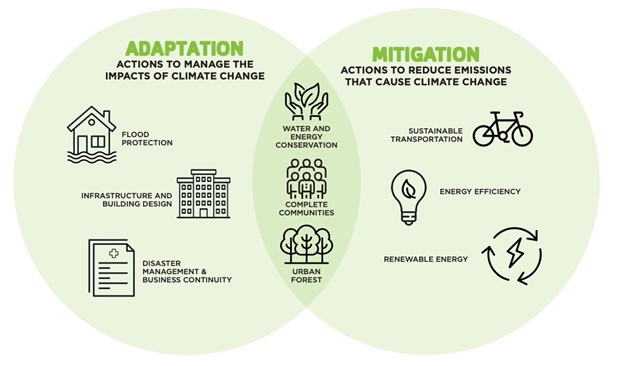
The Strategy will:
- Provide a path to reduce greenhouse gas emissions
- Build resiliency of the City’s infrastructure, agriculture, energy systems, land use, natural environment, and the community at large
- Include equity considerations with the knowledge that climate impacts are not felt equally or equitably across people and communities
- Contain recommendations will be cost effective, pragmatic, measurable and achievable
Adaptation Planning
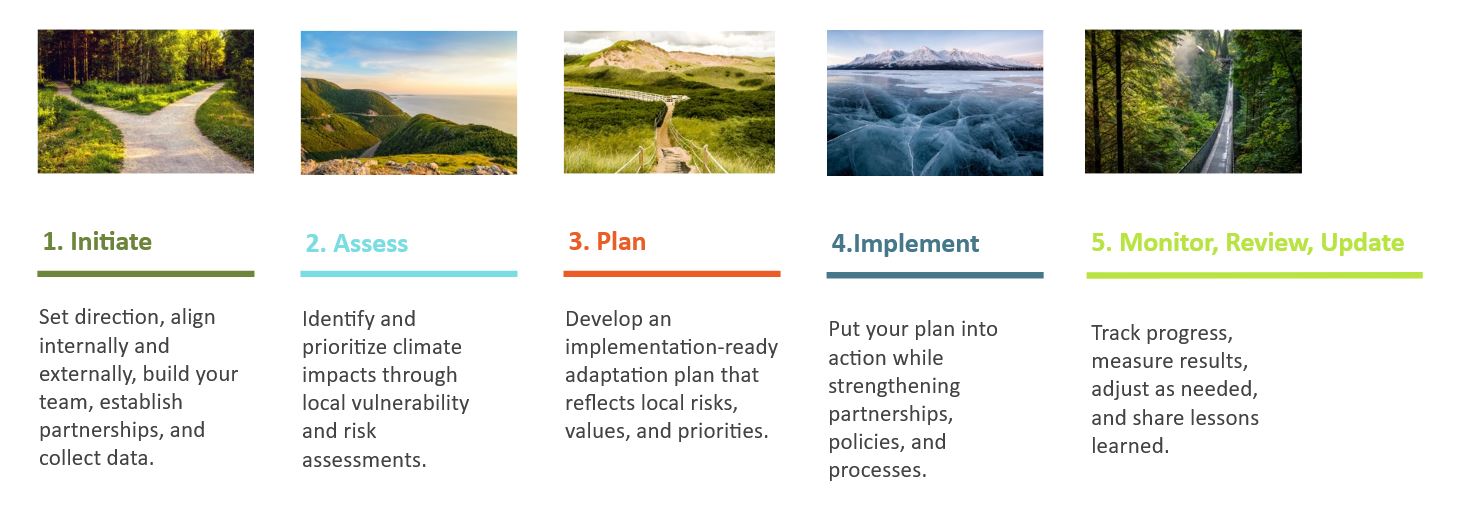
The adaptation planning will follow the Building Adaptive and Resilient Communities (BARC) framework, which supports local governments in preparing for the impacts of climate change. The framework consists of five milestones detailed below. Initiate, Assess, Plan, Implement, and Monitor, Review and Update. The BARC milestones are illustrated below.
Mitigation Planning
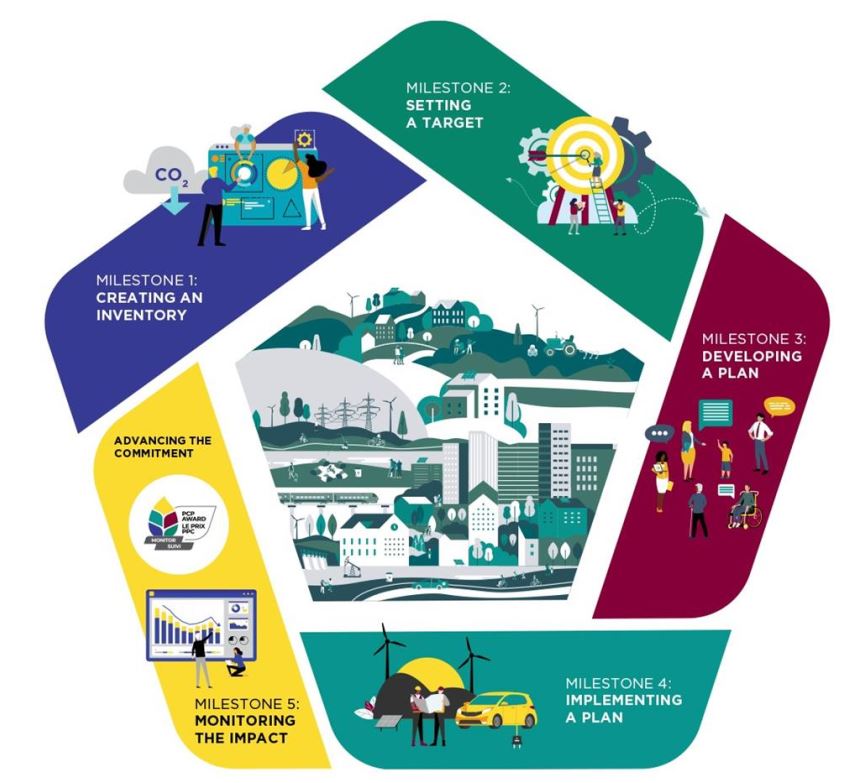
The mitigation planning will follow the Partners for Climate Protection milestone framework, which is a five-step milestone framework to help local governments take action on climate change by reducing emissions within the municipality. The five milestones are illustrated below.
How can you make a difference?
There are a number of ways you can help inform the Climate Change Strategy while also identifying how you can personally reduce energy and greenhouse gas emissions and build personal resiliency to climate change. Here’s some ideas:
- Subscribe to our newsletter to receive updates on how the Climate Change Strategy is progressing.
- Complete the survey. The survey results will in part help shape the direction of the final plan, including what actions have community support for early implementation.
- Engage with the interactive tools on this page to share your questions, input and feedback with our team.
- If you want more information, you can review all of the existing documents the City has uploaded to the Document Library on this page. For example, the Climate Science Report contains background information on how the City of Kawartha Lakes’ climate is projected to change by the year 2100. By understanding how our climate is expected to change, you will have a better understanding of how important it is to act.
- Review the actions in the Healthy Environment Plan and Climate Change Strategy and integrate some of these changes into your own life.
- Lastly, you can share this information and webpage with your friends, family, and colleagues so that they can contribute throughout the process as well.
Survey
Interactive Map
News
Q & A
Ask the Project Team
If you have questions about the Climate Change Strategy or the process, you can contact the project team directly by asking here.
To ask a question you must create an account or log in.
These are the people that are listening and responding to your questions.
Project Team
{{question.description}}


